

- What Should You Wear Golfing in Cold Weather?
- How Cold Is Too Cold for Golf?
- Why Layering Works Better Than One Heavy Jacket
- Quarter Zips We’d Wear for Cold Weather Golf
- What to Wear for Golf in 40°F, 50°F, and 60°F Weather
- How to Stay Warm Without Restricting Your Swing
- How to Dress When It’s Cold, Windy, or Wet
- Conclusion
- FAQs
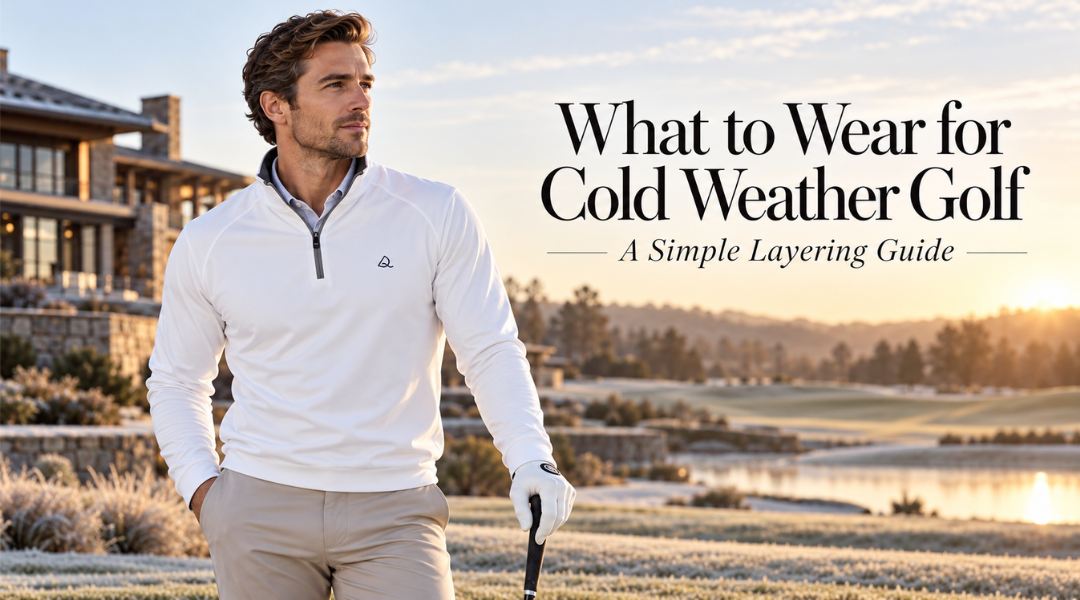
Cold weather doesn’t have to keep you off the course. The key is wearing enough to stay comfortable without adding so much bulk that your swing feels restricted. If you’re wondering what to wear golfing in cold weather, a few light, adjustable layers will usually take you much further than one heavy jacket.
What Should You Wear Golfing in Cold Weather?

Cold-weather golf is easier when you dress in light, flexible layers rather than one bulky outfit. Start with a comfortable base, add warmth as needed, and keep your swing freedom in mind.
Start With a Lightweight Base Layer
On a cool fall morning, a golf polo may be enough underneath. When temperatures drop, switch to a lightweight long-sleeve base layer that sits close to the body without feeling tight. The goal is to add warmth without creating extra bulk before you’ve even added your next layer.
Add a Flexible Mid-Layer
This is where I usually reach for a quarter zip. It adds useful warmth over a polo or base layer, still leaves plenty of room to swing, and the zipper makes it easy to adjust as you warm up. A lightweight golf hoodie or sweater can work too, but a quarter zip is especially easy to wear from the course to the clubhouse.
Finish With a Weather-Ready Outer Layer
You won’t need a jacket for every cold round, so save the outer layer for wind, rain, or genuinely low temperatures. A lightweight wind jacket works well on breezy days, while wet conditions call for something water-resistant or waterproof. Whatever you choose, make sure it doesn’t restrict your shoulders through the swing.
Don’t Ignore Your Lower Half
Golf pants or chinos are usually enough for cool conditions, with a thin thermal layer underneath when it gets colder. Water-resistant golf shoes and warm socks help when the course is wet or frosty, while a beanie, gloves, neck gaiter, or hand warmers can be added as needed.
How Cold Is Too Cold for Golf?

There isn’t a magic temperature where golf suddenly becomes “too cold.” A calm, sunny 42°F morning can feel much better than 50°F with wind and drizzle, so I’d look at the full forecast—not just the number on the thermometer. Whether you’re walking or riding, how exposed the course is, and your own tolerance for cold all make a difference.
As a general rule, temperatures in the 50s usually call for one light extra layer, while the 40s are where a more deliberate layering setup starts to make sense. Once it drops below that, wind protection, warm hands, dry feet, and adjustable layers become much more important. Frost, rain, and frozen ground can also affect whether the round is worth playing, so course conditions matter just as much as the temperature.
Why Layering Works Better Than One Heavy Jacket
It’s tempting to grab the warmest jacket you own on a cold morning, but that usually isn’t the best move for golf. Thick outerwear can feel fine while you’re standing still, then start getting in the way once you make a full turn. A few lighter layers keep you warm without the same bulk around your shoulders and arms.
They’re also much easier to adjust as the round goes on. Start with a base layer, add a quarter zip or sweater, and bring in an outer shell only when the wind or cold really calls for it. If the sun comes out or you warm up after a few holes, just unzip or remove a layer instead of being stuck in one heavy jacket.
Quarter Zips We’d Wear for Cold Weather Golf
If I were picking four quarter zips for cold-weather golf, these are the ones I’d start with. Each brings something a little different, from easy everyday layering to a more polished or expressive look.
1. [Performance Quarter Zip Pullover]
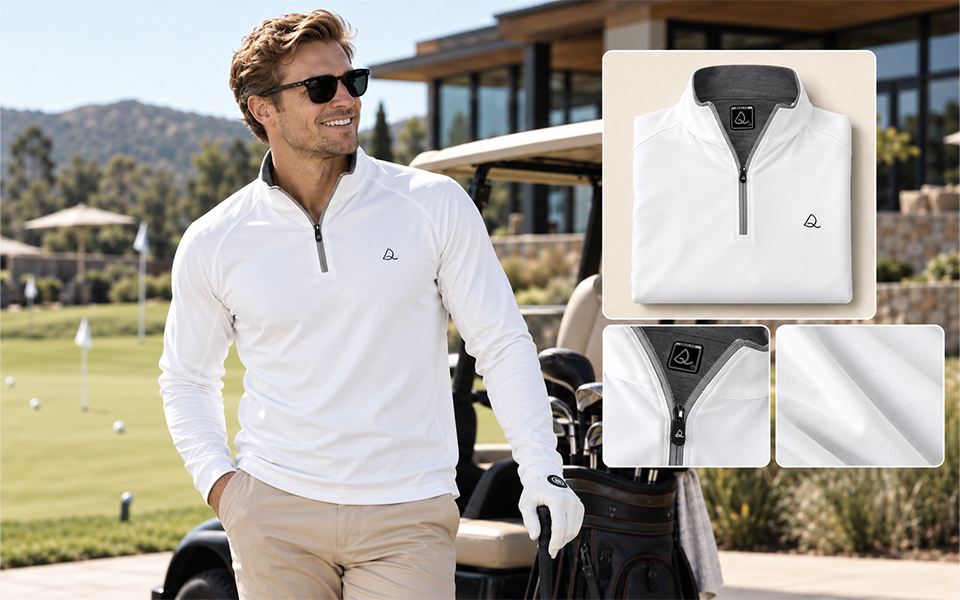
Best For: Easy Everyday Layering
Why We Like It:
This is probably the safest pick of the four if you just want something you can throw on without thinking too much about the rest of the outfit. I’d wear it over a polo shirt for an early tee time, then keep it on for lunch afterward. It’s the kind of quarter zip that earns its place by being easy rather than trying to be the most noticeable piece you own.
2. [Holiday Links Fleece Quarter Zip]
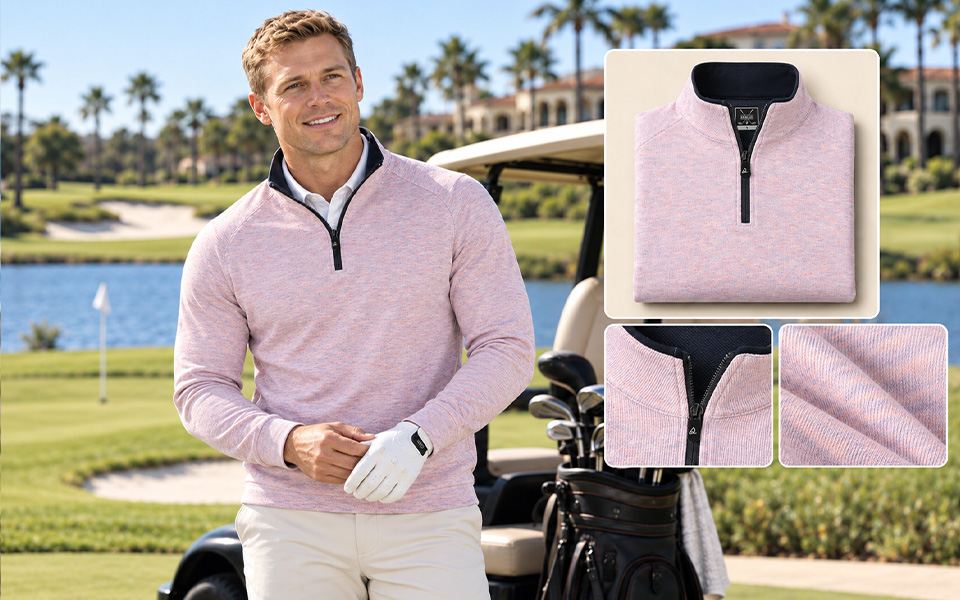
Best For: Colder Morning Rounds
Why We Like It:
This is the one I’d reach for when the forecast looks genuinely cold, and I want a little more warmth without jumping straight to a heavy jacket. It still works easily over a polo, but feels better suited to those early tee times when the course is frosty, and you know you’ll want an extra layer for the first few holes.
3. [Longhorn Ranch Quarter Zip]
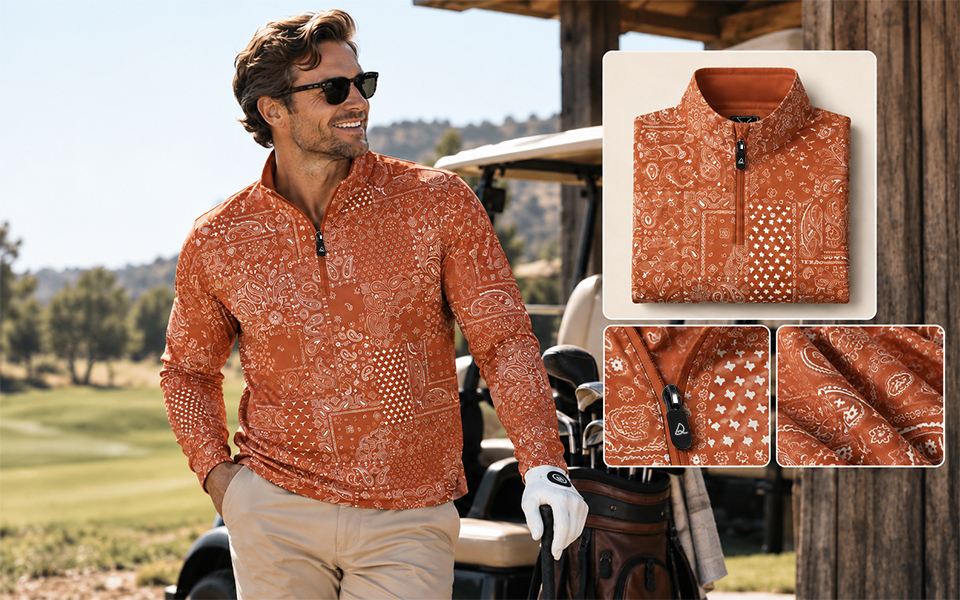
Best For: Golfers Who Like a Little Personality
Why We Like It:
I’d choose this one when the rest of the cold-weather outfit is starting to feel a little too predictable. The print gives it enough character to stand out, but you don’t need to do much else—simple pants, clean shoes, and you’re done. It feels especially right for fall rounds when you want something more interesting than another solid navy or gray layer.
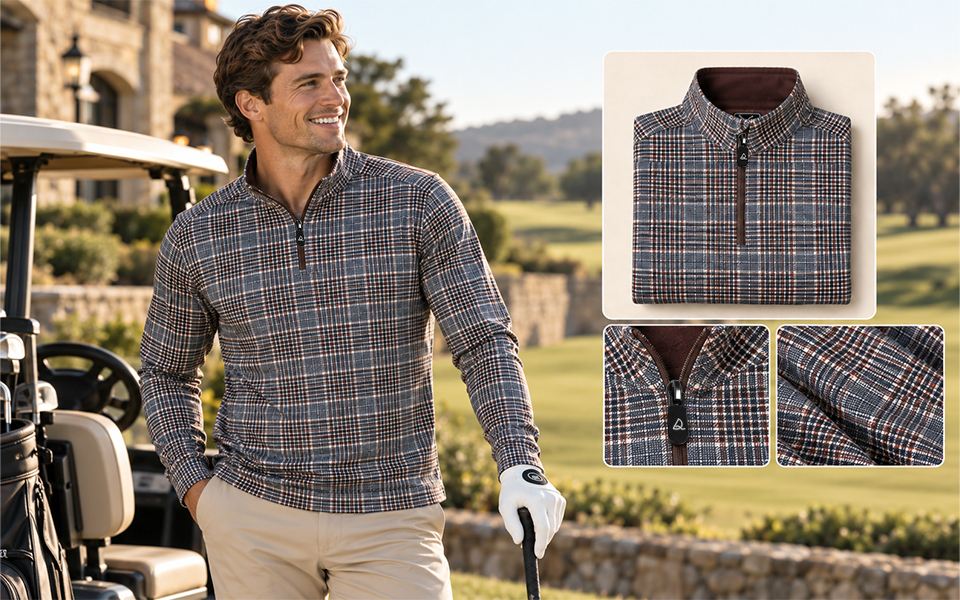
4. [Glen Plaid Quarter Zip]
Best For: Course-to-Clubhouse Style
Why We Like It:
This is the one I’d grab if I knew the round was turning into lunch or drinks afterward. It feels a little more put together than a typical sporty layer, so you don’t immediately look like you just stepped off the course. If your golf wardrobe leans classic and you like pieces that can do more than one job, this is probably the easiest recommendation here.
What to Wear for Golf in 40°F, 50°F, and 60°F Weather
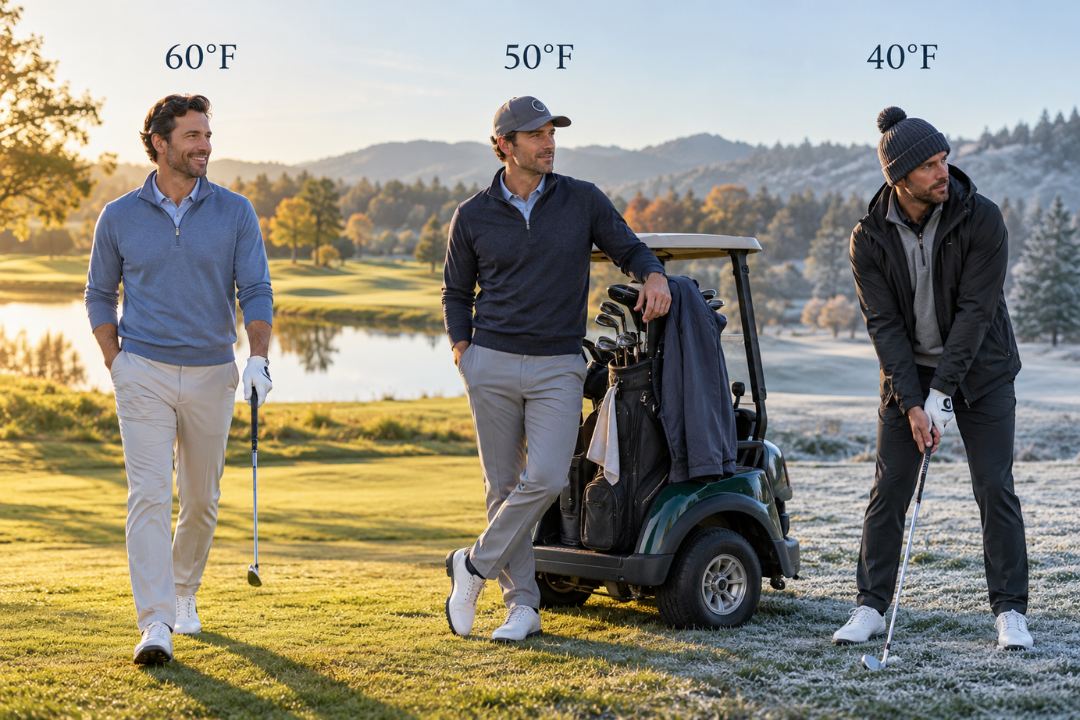
Temperature isn’t the only factor, but these simple outfit formulas are a good place to start. Adjust them for wind, rain, sunshine, and whether you’re walking or riding.
1. Around 60°F
You probably don’t need a full cold-weather setup yet.
Golf polo + lightweight quarter zip + golf pants + golf shoes
Wear the quarter zip for the cooler start, then open it or take it off as the day warms up.
2. Around 50°F
This is where layering starts to become much more useful.
Golf polo or lightweight base layer + quarter zip + golf pants + water-resistant golf shoes
I’d keep a lightweight jacket in the bag if wind is in the forecast, especially if you’re riding rather than walking.
3. Around 40°F
At this temperature, I’d plan on a full layering setup rather than relying on one warm piece.
Long-sleeve base layer + quarter zip or warm mid-layer + lightweight wind-resistant jacket + golf pants + warm socks
Add a beanie or hand warmers if you need them, but keep every layer light enough that your swing still feels natural.
How to Stay Warm Without Restricting Your Swing
Staying warm shouldn’t come at the expense of your swing. The goal is to add enough protection for the cold while keeping your shoulders, arms, and torso free to move.
-
Keep the bulk down: A few lightweight layers usually work better than one thick sweater or heavy jacket, especially around the shoulders and arms.
-
Choose a fit that moves with you: Leave enough room for layering, but avoid excess fabric that bunches or pulls across your back during the swing.
-
Adjust before you overheat: Walking will warm you up faster than riding, so unzip your quarter zip or remove a layer as soon as you start feeling too warm.
How to Dress When It’s Cold, Windy, or Wet
Temperature is only part of the story. Wind and rain can make the same cold day feel completely different, so your layers should match the conditions you’re actually playing in.
When It’s Cold but Calm
Stick with light, flexible layers and build warmth gradually. A base layer, quarter zip, and golf pants may be enough on a calm day, while warm socks, gloves, or a beanie can add comfort without putting more bulk around your shoulders and torso.
When It’s Windy
Focus on blocking the wind rather than simply adding another thick layer. A lightweight wind-resistant jacket over your quarter zip can keep cold air from cutting through without making your swing feel heavy, and you can remove it easily if conditions settle down later.
When It’s Wet
Keeping dry becomes the priority. Add a water-resistant or waterproof outer layer, wear weather-ready golf shoes, and keep an extra glove or small towel in your bag—once your hands or feet get wet, a cold round can become uncomfortable pretty quickly.
Conclusion
Cold-weather golf is a lot more enjoyable when your outfit can adapt with the round. Start light, add warmth where you need it, and keep your layers flexible enough to move freely as the temperature, wind, and weather change. Get that balance right, and a chilly tee time can still be one of the best rounds of the season.
FAQs
What Should You Wear for Golf in Cold Weather?
Start with a light base layer, add a quarter-zip or similar mid-layer, and bring a wind- or rain-resistant outer layer if the forecast calls for it. Keep the whole setup light enough that you can still swing comfortably.
Is a Quarter Zip Good for Cold Weather Golf?
Yes. A quarter zip adds warmth without much bulk, and the zipper makes it easy to cool down once you start warming up on the course.
How Many Layers Should You Wear for Winter Golf?
For most cold rounds, two or three light layers are usually enough. It’s better to wear pieces you can add or remove than rely on one heavy jacket.