


- What Is a Birdie in Golf?
- How Does a Birdie Work in Golf Scoring?
- Why Is It Called a Birdie?
- How Rare Is a Birdie in Golf?
- Birdie vs Par vs Eagle vs Bogey
- How to Score More Birdies?
- What Is a Good Number of Birdies for an Amateur Golfer?
- Conclusion
- FAQs
For many golfers, few moments feel better than watching a putt roll in and seeing a number lower than par on the scorecard. That exciting moment has a name: a birdie. But what is a birdie in golf, and why do golfers of every skill level chase this achievement? In this guide, we’ll explain the birdie meaning, scoring rules, history, and practical tips to help you create more birdie opportunities on the course.
What Is a Birdie in Golf?

A birdie in golf means finishing a hole one stroke under par (-1). In simple terms, if a hole is expected to take four shots and you finish it in three, you have made a birdie.
The number of strokes needed depends on the hole’s par. Here are some common examples:
| Hole Type | Par Score | Birdie Score |
|---|---|---|
| Par 3 | 3 strokes | 2 strokes |
| Par 4 | 4 strokes | 3 strokes |
| Par 5 | 5 strokes | 4 strokes |
For example:
- Making a 2 on a par 3 = Birdie
- Making a 3 on a par 4 = Birdie
- Making a 4 on a par 5 = Birdie
A birdie is one of the most exciting achievements in golf because it means you played the hole better than expected.
How Does a Birdie Work in Golf Scoring?
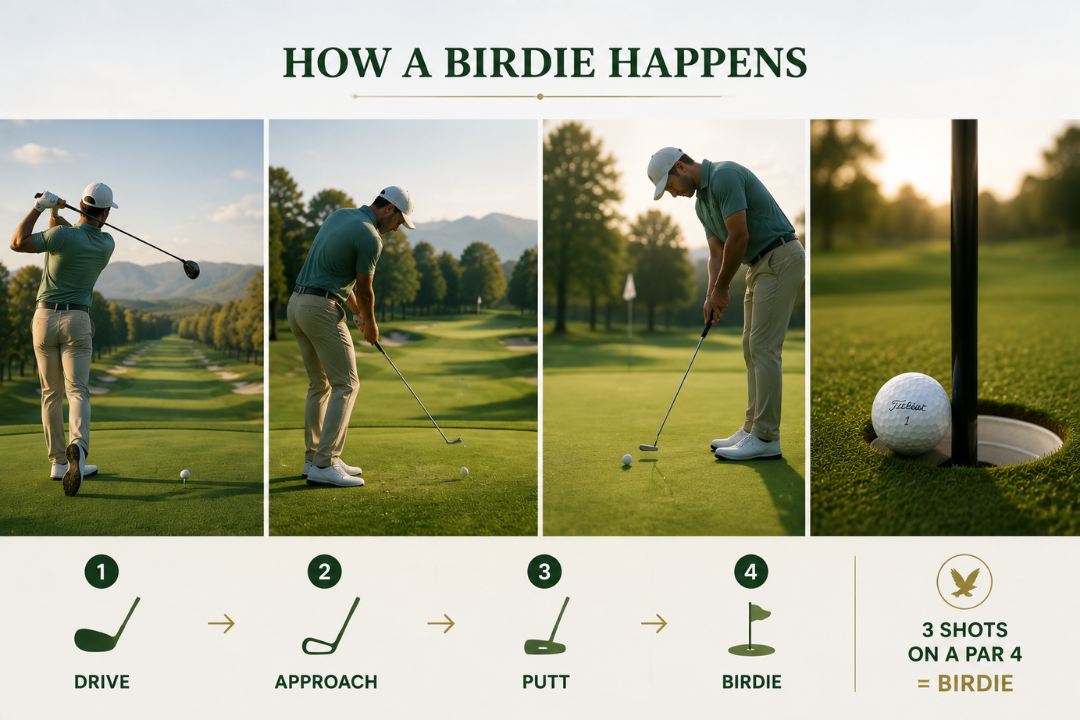
Golf scoring is measured against par, the expected number of strokes for each hole. A birdie happens when a golfer completes the hole with one fewer stroke than that target score.
For example, on a par 4 hole:
- 4 strokes = Par
- 3 strokes = Birdie (-1)
- 5 strokes = Bogey (+1)
The same scoring system applies across the course. Whether it is a par 3, par 4, or par 5 hole, finishing one shot below par always counts as a birdie.
Why Is It Called a Birdie?

The term “birdie” dates back to the early 1900s in the United States. At the time, the word “bird” was American slang for something excellent or impressive. When a golfer made an outstanding shot, it was often described as a “bird.”
As golfers began using the term more frequently, birdie evolved into a scoring term for finishing a hole one stroke under par. The name eventually became an official part of golf language and remains one of the most recognized golf scoring terms today.
How Rare Is a Birdie in Golf?
The difficulty of making a birdie in golf depends greatly on a player’s skill level. Professional golfers may create multiple birdie opportunities in a single round, while many amateur golfers see each birdie as a memorable achievement.
Birdie frequency looks very different depending on your skill level:
| Golfer Level | How Common Is a Birdie? |
| Beginner Golfers | Birdies are rare and often feel like a major milestone. |
| Intermediate Golfers | More consistent players can create occasional birdie opportunities with better strategy and ball striking. |
| Advanced Golfers | Low-handicap players often expect to make multiple birdies during a strong round. |
Birdie vs Par vs Eagle vs Bogey
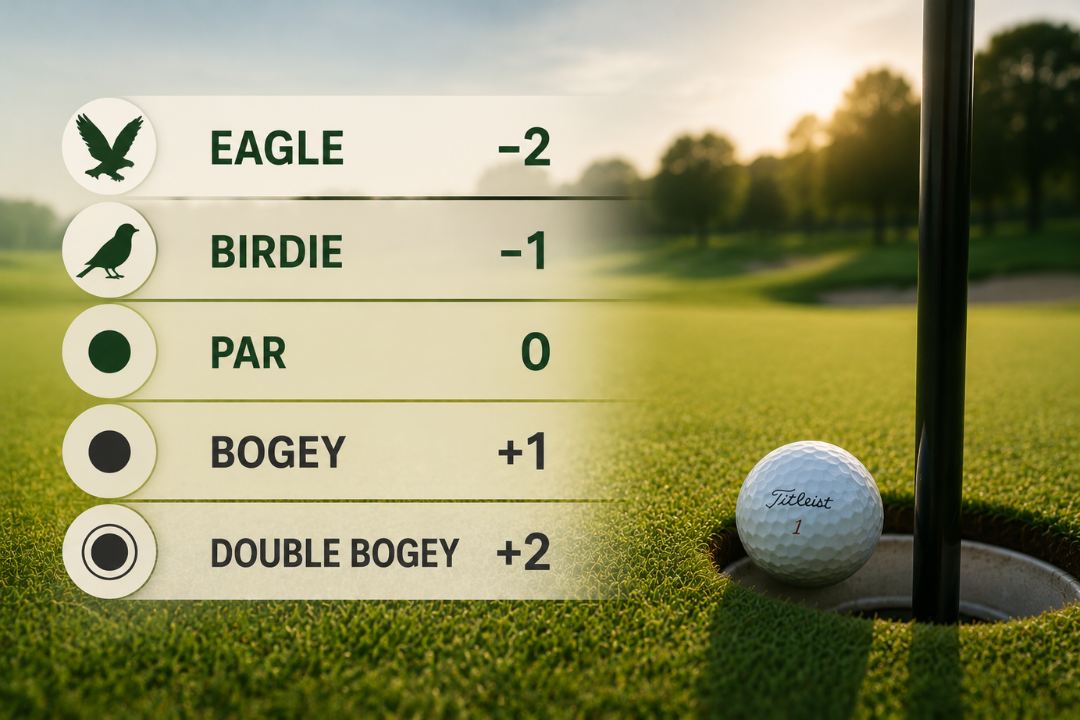
Understanding birdie meaning becomes easier when you compare it with other common golf scoring terms. The lower the score is compared with par, the better the result.
| Golf Term | Meaning | Example on Par 4 |
|---|---|---|
| Eagle | Two under par (-2) | 2 strokes |
| Birdie | One under par (-1) | 3 strokes |
| Par | Expected score | 4 strokes |
| Bogey | One over par (+1) | 5 strokes |
| Double Bogey | Two over par (+2) | 6 strokes |
In simple terms, an eagle is better than a birdie, while a bogey means you used more strokes than expected. For most golfers, making a birdie is already an exciting achievement.
How to Score More Birdies?
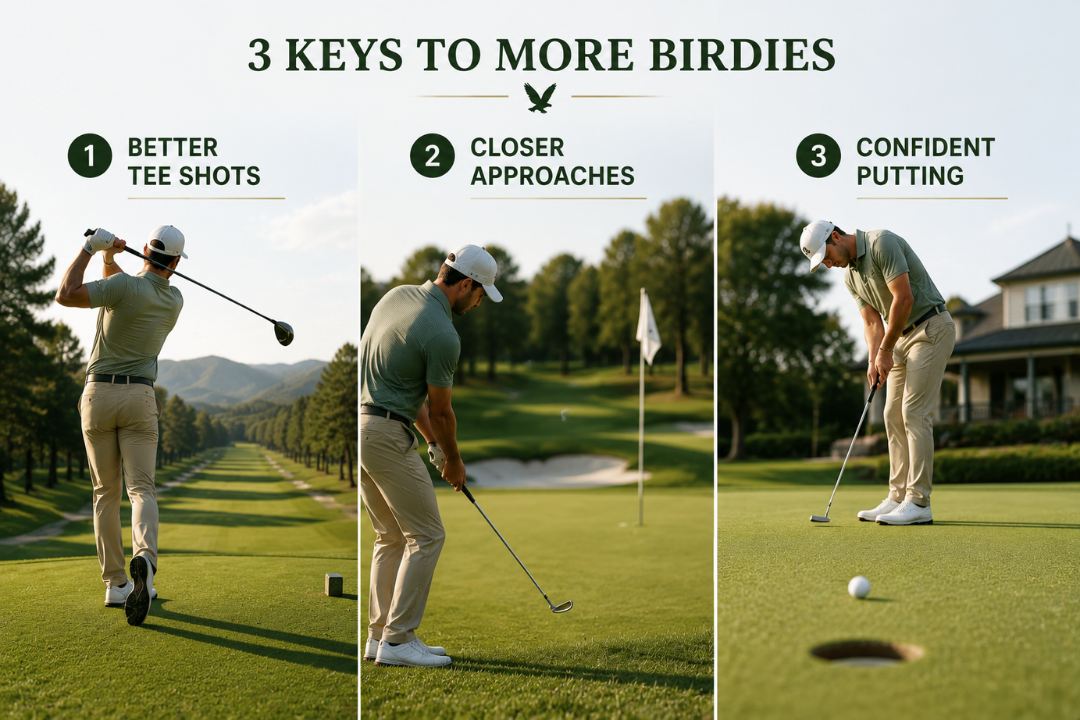
Making more birdies is not only about hitting longer drives. Better decisions, consistent practice, and staying comfortable throughout your round can all create more scoring opportunities.
Improve Your Putting
Many birdie chances come down to the final shot. A confident putting routine helps you finish more holes when you have a chance to go under par.
Improve Your Approach Shots
Accurate approach shots give you shorter putts and more realistic birdie opportunities. Focus on distance control and hitting more greens.
Play Smarter From the Tee
A good tee shot creates better positions for your next shot. Avoid unnecessary risks and choose shots that keep you in scoring range.
Stay Comfortable on the Course
Long rounds require focus from the first tee to the final hole. A comfortable golf polo or quarter zip with breathable fabric and easy movement helps you stay ready for every shot.
Explore our favorite styles for your next round:
- Performance Golf Polos for comfortable everyday play

- Printed Golf Polos for golfers who want standout style

- Golf Quarter Zips for extra warmth and versatile layering

What Is a Good Number of Birdies for an Amateur Golfer?
There is no exact number of birdies in golf that defines a great round because every golfer has a different skill level. For many amateur players, making even one birdie is already a memorable achievement. A typical round may look different depending on your experience:
- Beginner Golfers: A single birdie can be a big milestone and a sign that your skills are improving.
- Intermediate Golfers: More consistent players may create several birdie chances through better approach shots, putting, and course management.
- Advanced Golfers: Low-handicap golfers often make multiple birdies in a strong round and use them to build lower scores.
You may also like: What Is a Mulligan in Golf and Is It Actually Allowed
Golf Scores Decoded: What is a Good Golf Score?
Conclusion
A birdie in golf represents one of the most exciting moments on the course. It means you completed a hole better than expected and showed strong execution from tee to green. While making birdies takes practice, understanding how scoring works is the first step toward improving your game. Whether you are chasing your first birdie or trying to make more during each round, every birdie is a reminder of why golfers love this game.
FAQs
What does birdie mean in golf?
A birdie means finishing a golf hole one stroke under par. For example, scoring a 3 on a par 4 hole or a 4 on a par 5 hole is considered a birdie.
Is a birdie better than par?
Yes. A birdie is better than par because it means you completed the hole using one fewer stroke than expected. Lower scores are always better in golf.
How hard is it to make a birdie in golf?
Making a birdie depends on your skill level, course difficulty, and playing conditions. Professional golfers make birdies regularly, while beginner golfers may only achieve them occasionally.
Can beginners make a birdie?
Yes. Beginners can make birdies by improving their short game, putting accuracy, and course management. A well-planned shot strategy can create more scoring chances.