


Table of Content
- What is Sakura?
- Popular Types of Sakura in Japan
- Sakura vs. Plum vs. Peach: How to Identify?
- How to Bring Sakura Into Your Day?
- When is Sakura Season in Japan?
- Conclusion
- FAQs
Every spring, Japan transforms into a breathtaking sea of pink and white cherry blossoms, captivating locals and visitors alike. These iconic flowers, known as sakura, are more than just beautiful—they symbolize renewal, fleeting beauty, and centuries of cultural tradition that shape Japanese life. But what exactly are sakura, and why do they hold such a special place in Japanese hearts? In this article, we’ll explore the story behind sakura, the different types of sakura, the best times to see them, and ways to bring a touch of their fragrance into your own life.
What is Sakura?
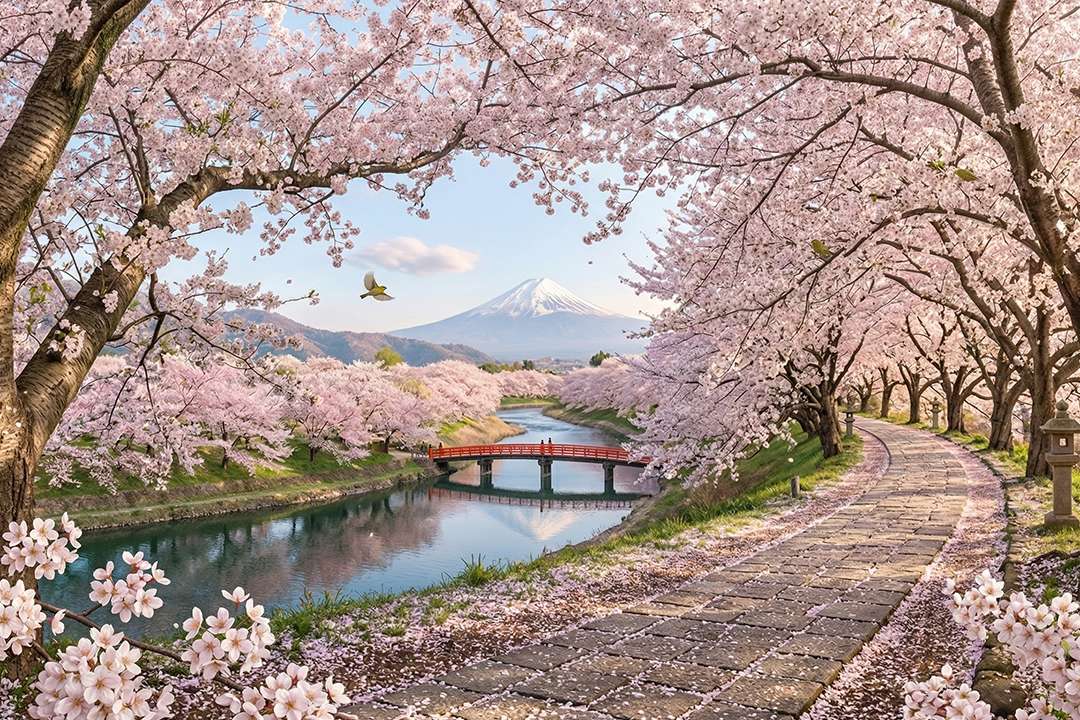
In the simplest terms, Sakura is the Japanese word for ornamental cherry trees and their blossoms. Unlike the cherry trees that grow the fruit you find in a grocery store, Sakura are bred specifically for their stunning flowers. In Japan, Sakura is the unofficial national flower. It serves as a powerful symbol of renewal, hope, and the heartbreaking beauty of a fleeting moment.
History of Sakura in Japan
The obsession didn't start yesterday. Back in the Nara Period (710–794), people actually admired plum blossoms more. But by the Heian Period, the focus shifted to Sakura. Emperors and aristocrats would hold grand feasts under the trees—the origin of Hanami (flower viewing). Today, that tradition has evolved from poetry readings to blue-tarp picnics with convenience store snacks and sake.
The Beauty of Varieties
One of the biggest misconceptions is that all Sakura look the same. In reality, there are over 200 cultivars found across the Japanese archipelago. Some have five petals, which is the classic look most people recognize. Others, known as Yaezakura, can have up to 50 petals per bloom and resemble miniature peonies. The colors range from a snowy, translucent white to a vibrant pink, and even rare greenish yellow hues such as the Ukon variety.
Short Lifespan
The most famous and perhaps most tragic thing about Sakura is its brevity. Once a tree reaches its peak, known as Mankai, it typically stays that way for only about a week before the petals begin to fall.
This here today, gone tomorrow nature is central to the Japanese aesthetic of Mono no aware. This is a bittersweet appreciation of the impermanence of things. To the Japanese, the blossoms are most beautiful not just when they are on the tree, but when they are dancing through the air in a petal blizzard called Sakura Fubuki.
This here today, gone tomorrow nature is central to the Japanese aesthetic of Mono no aware. This is a bittersweet appreciation of the impermanence of things. To the Japanese, the blossoms are most beautiful not just when they are on the tree, but when they are dancing through the air in a petal blizzard called Sakura Fubuki.
Popular Types of Sakura in Japan
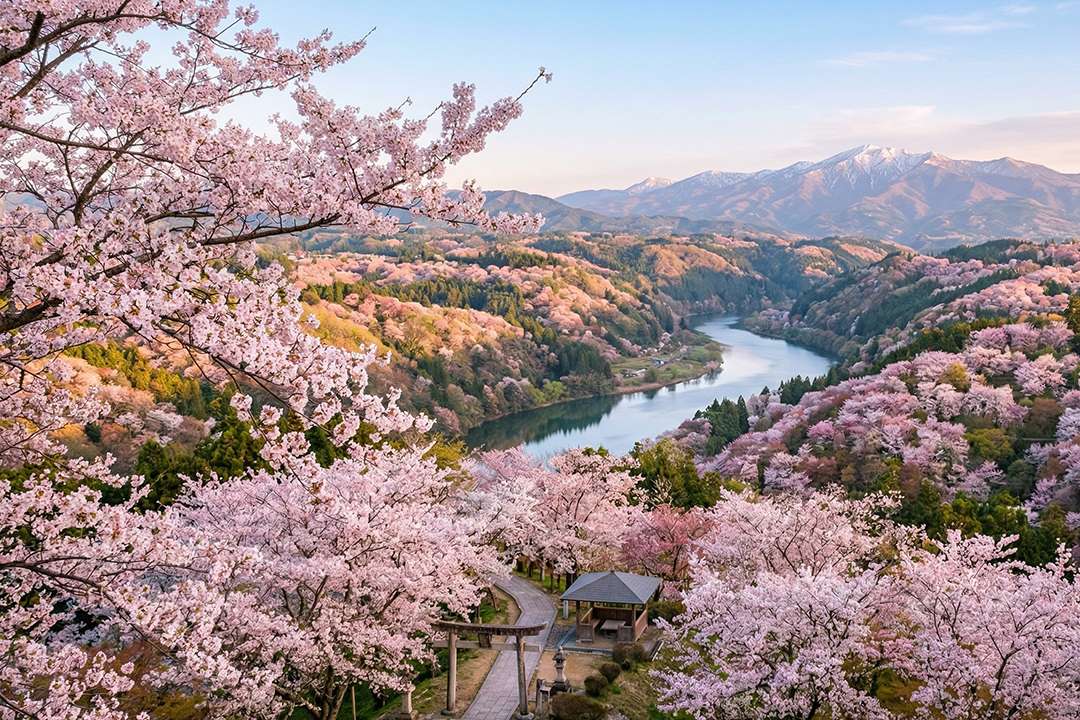
Japan is home to over two hundred varieties of cherry blossoms, but a few iconic types define the spring season. Each has a unique look and blooming schedule that makes it stand out.
1. Somei Yoshino
This is the most famous cherry blossom in the world. You can identify it by its five pale pink and almost white petals. The most striking feature of Somei Yoshino is that the flowers bloom in massive clouds before any green leaves appear on the branches.
2. Shidarezakura
Commonly known as the Weeping Cherry, this variety is easy to spot because of its long and drooping branches. The flowers hang down like a floral waterfall, often reaching all the way to the ground. These trees are a favorite at ancient temples and Japanese gardens.
3. Yaezakura
If you see a cherry blossom that looks like a miniature rose, it is likely a Yaezakura. These are double-flowered cherries with many layers of petals instead of just five. They usually bloom a bit later in the season and have a much deeper pink color and a fuller appearance.
4. Yamazakura
This is a wild variety often found in the mountains of Japan. Unlike the Somei Yoshino, the Yamazakura blossoms emerge at the same time as its reddish brown leaves. This creates a beautiful contrast of colors that is very different from the solid pink of cultivated trees.
Sakura vs. Plum vs. Peach: How to Identify?
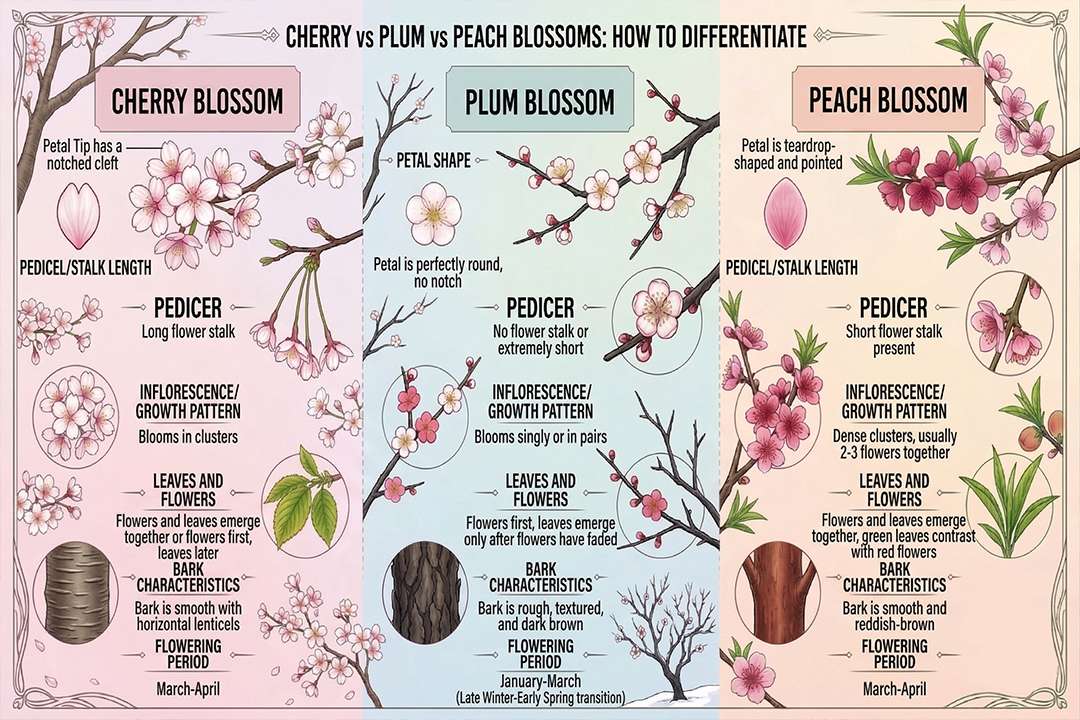
Distinguishing Sakura from its spring cousins is easier than you think if you know exactly where to look. While they all share a similar palette of pinks and whites, these three features are the ultimate giveaways.
1. Look at the Petal Tips
The most famous trait of a Cherry Blossom is the tiny notched cleft at the tip of each petal. This small V-shape is unique to Sakura. In contrast, Plum petals are perfectly round, and Peach petals are pointed like a teardrop.
2. Check the Flower Stalks
Sakura flowers always hang from long and slender green stalks called pedicels. This gives them their signature drooping and graceful look. Plum blossoms grow directly from the branch with no stalk at all, while Peach blossoms have very short stems that keep them close to the wood.
3. Observe the Bark
If the flowers are out of reach, look at the tree trunk. Sakura bark is easily identified by its smooth surface and distinct horizontal lines. Plum trees have much darker and rougher bark, whereas Peach bark has a smoother texture with a noticeable reddish-brown tint.
How to Bring Sakura Into Your Day?
You do not have to be in Japan to experience the magic of the cherry blossom season. Bringing the spirit of Sakura into your daily life is all about embracing the freshness and optimism that these blooms represent.
Wear the Spirit of Spring
One of the most stylish ways to celebrate the season is by incorporating floral patterns into your wardrobe. A well-designed Sakura polo shirt is a perfect choice for those who want to carry the elegance of the blossoms wherever they go. The delicate pink petals set against a classic navy background offer a sophisticated look that works just as well on the golf course as it does at a weekend brunch. It is a subtle but powerful way to express your appreciation for nature while staying effortlessly sharp.
Sakura Polo

White Sakura Polo

Create a Floral Sanctuary
You can also bring the outdoors in by adding small cherry blossom accents to your home or workspace. A simple branch in a minimalist vase can instantly brighten a room and improve your mood. Pairing this with a light floral scent or a cup of cherry blossom tea can turn an ordinary afternoon into a peaceful hanami experience. By choosing items that reflect the beauty of Sakura, you are not just following a trend but celebrating a timeless story of renewal and grace.
When is Sakura Season in Japan?
Timing a Sakura trip is a high-stakes game of nature roulette. Generally, the Sakura Front moves from the warm south to the cold north over several months.
- Late March: Tokyo, Osaka, and Kyoto usually hit their peak during this window.
- Early April: The northern parts of the main island, such as Sendai, begin to bloom.
- Late April and Early May: Hokkaido finally sees the blooms as the weather warms up in the far north.
If you are planning a trip, make sure to check the Japan Meteorological Corporation website starting in January. They release highly accurate maps that track the first bloom and full bloom dates for every major city.
Conclusion
Cherry blossoms are more than just a seasonal spectacle—they celebrate the fleeting moments of beauty in life, reminding us to cherish the present and connecting generations through culture. Whether you’re planning a trip to Japan, savoring sakura-flavored treats at home, or simply strolling beneath blooming branches, the charm of these flowers is within reach. So when spring arrives, take a moment to enjoy the sakura—they may bring a little reflection, joy, and wonder to your everyday life.
FAQs
Is Sakura the Same As Cherry Blossom?
Yes! Sakura is the Japanese word for cherry blossom. While “cherry blossom” is the general English term, “sakura” specifically refers to the varieties commonly found and celebrated in Japan.
Why Do Japanese Love Sakura?
Cherry blossoms symbolize renewal, beauty, and the transient nature of life. Their brief bloom encourages reflection, appreciation of the present, and gatherings with friends and family during hanami.
What Does Sakura Smell Like?
Sakura flowers have a subtle, delicate fragrance—lightly sweet and floral, not overpowering. The scent is often more noticeable in parks or gardens with many blooming trees.