

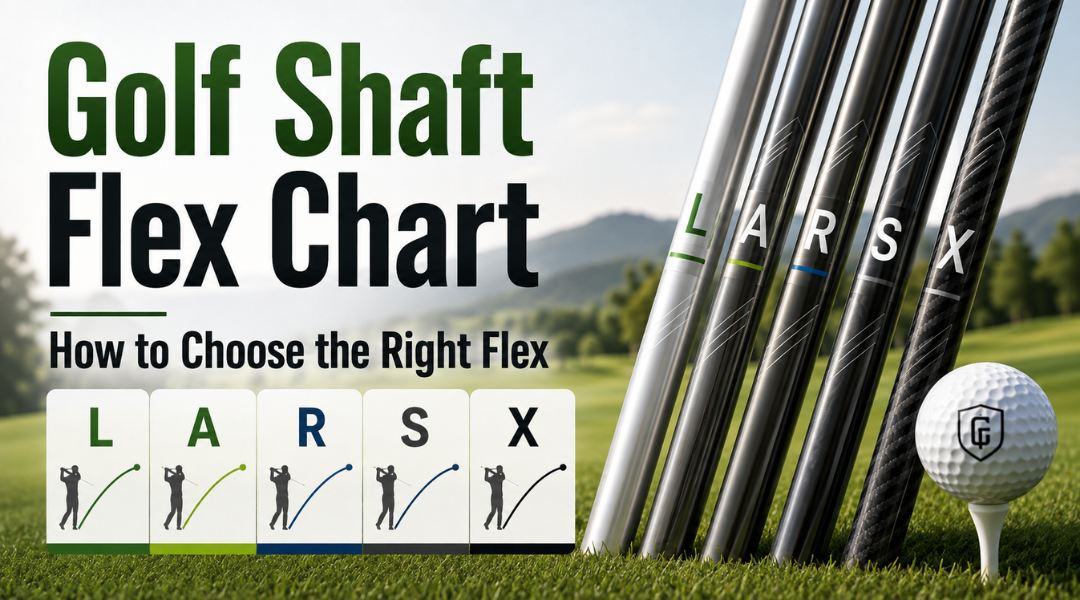
- Golf Shaft Flex Chart by Swing Speed
- Swing Speed vs Shaft Flex
- How to Choose the Right Golf Shaft Flex
- Regular vs Stiff Shaft Flex
- Does Shaft Flex Change Between Drivers and Irons?
- What Happens If Your Golf Shaft Flex Is Wrong?
- How to Test Your Golf Shaft Flex
- Conclusion
- FAQs
A golf shaft flex chart is a simple way to narrow down the right flex based on your swing speed, whether you’re looking at Regular, Stiff, Senior, or X-Stiff. But swing speed is only part of the picture—your tempo, transition, ball flight, and how the shaft feels can all help determine which flex actually fits your game.
Golf Shaft Flex Chart by Swing Speed
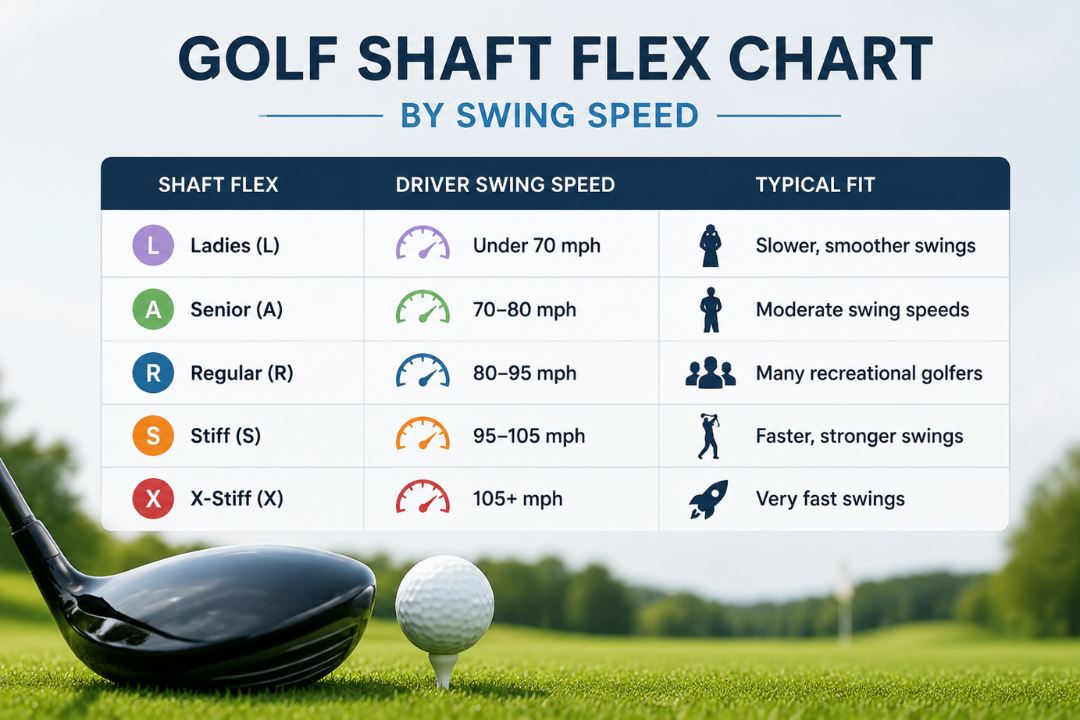
Your driver swing speed is one of the easiest ways to narrow down shaft flex. Use this golf shaft flex chart as a general starting point:
| Shaft Flex | Driver Swing Speed | Typical Fit |
|---|---|---|
| Ladies (L) | Under 70 mph | Slower, smoother swings |
| Senior (A) | 70–80 mph | Moderate swing speeds |
| Regular (R) | 80–95 mph | Many recreational golfers |
| Stiff (S) | 95–105 mph | Faster, stronger swings |
| X-Stiff (X) | 105+ mph | Very fast swings |
Your driver swing speed is one of the easiest ways to narrow down shaft flex. Use this golf shaft flex chart as a general starting point:
What Do Golf Shaft Flex Ratings Mean?
The letters describe general levels of shaft flexibility: L means Ladies, A means Senior, R means Regular, S means Stiff, and X means X-Stiff. In general, higher swing speeds tend to fit stiffer shafts, but weight, torque, and bend profile can also affect how a shaft feels and performs.
How to Read a Golf Shaft Flex Chart
Start with your average driver swing speed, not your fastest swing. An 88 mph swing, for example, generally points toward Regular, while 100 mph falls into the Stiff range.
If you're near a crossover point, such as 94–96 mph, test both flexes and compare ball flight, dispersion, consistency, and feel rather than choosing by swing speed alone.
Swing Speed vs Shaft Flex
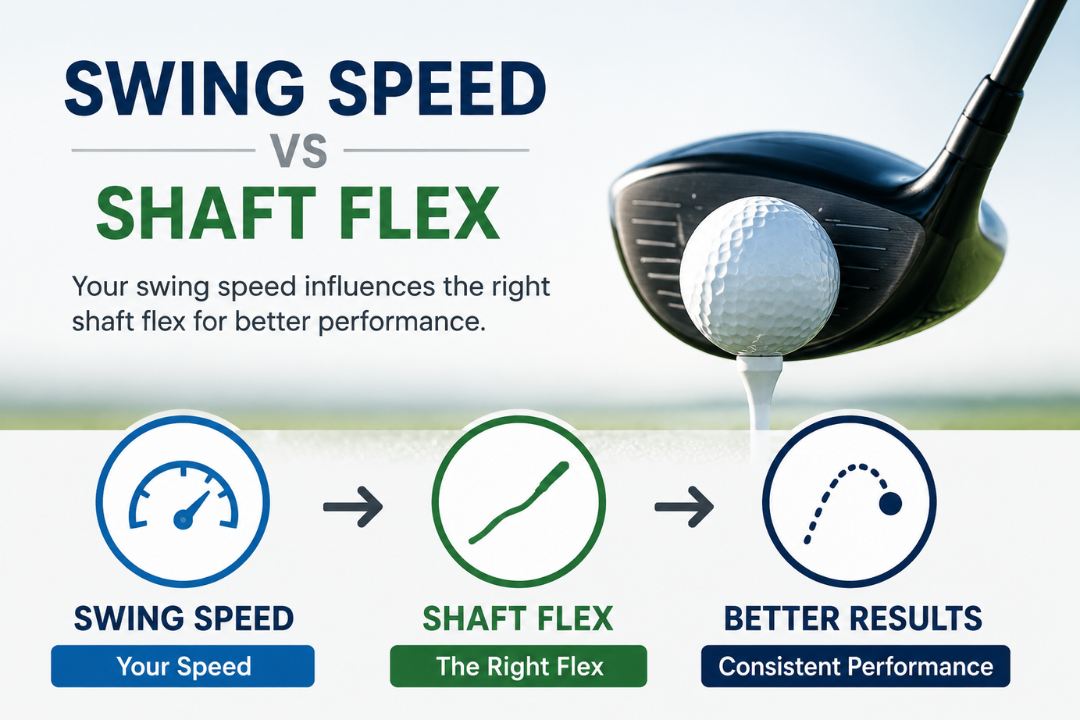
Swing speed and shaft flex are closely connected because faster swings generally put more load on the shaft. That’s why slower swing speeds often pair with more flexible shafts, while faster swing speeds typically move toward Stiff or X-Stiff shafts. But swing speed vs shaft flex isn’t a one-number formula.
Two golfers can both swing a driver at 95 mph and still prefer different flexes because of differences in tempo, transition, and shaft loading. If you're working on increasing your golf swing speed, keep in mind that speed changes may also affect which shaft feels right for your swing.
How to Choose the Right Golf Shaft Flex

Once the chart gives you a starting point, focus on how the shaft works with your actual swing. Beyond swing speed, three things can help narrow down the right flex:
1. Tempo and Transition
How you reach your swing speed matters. A quick, aggressive transition may feel better with a firmer setup, while a smoother tempo may work well with a shaft that loads more easily.
2. Ball Flight
Watch what happens after impact rather than judging a shaft by feel alone. Compare launch, spin, carry distance, and shot dispersion, with consistency being more important than one unusually long drive.
3. Shaft Feel
The right shaft should feel natural to load and control. A shaft that feels overly rigid or unusually loose may be worth comparing with another flex, especially when the feel matches what you're seeing in your ball flight.
Regular vs Stiff Shaft Flex
Choosing between Regular vs Stiff shaft flex depends on more than swing speed. Your tempo, transition, and how the shaft feels during the swing can also help point you in the right direction.
| Regular FlexStiff Flex | Stiff Flex | |
| Swing Speed | Typically moderate | Typically faster |
| Tempo | Often suits smoother swings | Often suits quicker, stronger swings |
| Shaft Feel | Generally easier to load | Generally firmer and more stable |
| Shaft Feel | Often suits smoother transitions | Often suits more aggressive transitions |
| If You're Between Flexes | Test for better feel and consistency | Test for better control and dispersion |
Does Shaft Flex Change Between Drivers and Irons?
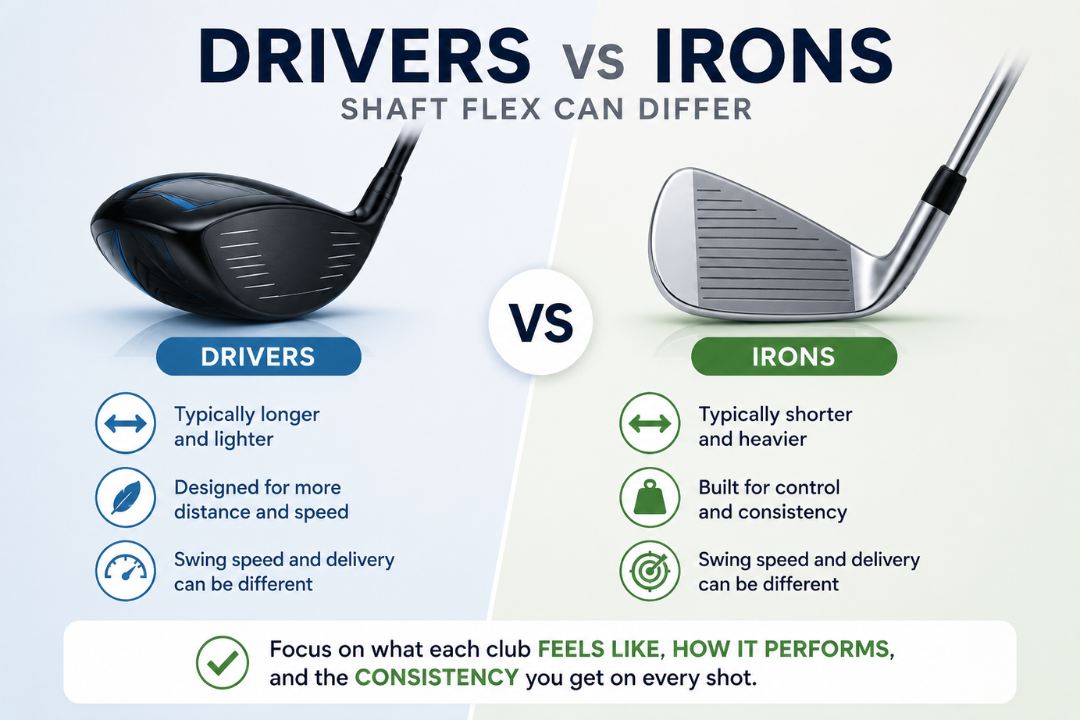
Yes. You shouldn’t automatically apply a driver shaft flex recommendation to your irons. Driver shafts are typically longer and lighter, while iron shafts are shorter and heavier, and your swing speed and delivery can also change between the two.
You may play Stiff in both your driver and irons, but that doesn’t mean the shafts will feel or perform the same. Instead of trying to match every flex label in your bag, focus on the feel, ball flight, and consistency you get from each club.
What Happens If Your Golf Shaft Flex Is Wrong?
Using the wrong shaft flex doesn’t mean every shot will be bad, but it can make timing, feel, and consistency harder to repeat. The signs can also look different depending on whether the shaft is too flexible or too stiff.
| Too Flexible | Too Stiff | |
|---|---|---|
| Feel | Soft or “whippy” | Rigid or “boardy” |
| Loading | May feel difficult to time | May feel difficult to load |
| Ball Flight | Launch and spin may become inconsistent | May produce a lower launch for some swings |
| Dispersion | Shots may spread wider | Contact and carry may become less consistent |
| Overall Control | Clubhead delivery may feel less predictable | Impact may provide less feedback |
How to Test Your Golf Shaft Flex
The best way to move beyond a golf shaft flex chart is to test different shafts in person. Keep the setup as consistent as possible so you can see what the shaft itself is changing.
- Narrow down your options. Use your average swing speed to choose two flexes worth testing.
- Keep the clubhead the same. Change only the shaft for a cleaner comparison.
- Hit several shots with each. Don’t judge a shaft from one great—or terrible—swing.
- Compare the results. Look at dispersion, launch, carry distance, consistency, and feel.
- Get fitted if needed. If the results are close, a professional fitting can help compare flex, weight, torque, and shaft profile.
Conclusion
A golf shaft flex chart is a great starting point, but the best flex is ultimately the one that gives you the most consistent results. Use your average swing speed to narrow the options, then compare how each shaft feels and performs before making your final choice—especially if you fall between two flexes. Getting ready for your next round? Explore our performance golf polos and quarter-zip pullovers for comfortable, course-ready layers.
FAQs
What shaft flex should I use for a 90 mph swing speed?
A 90 mph driver swing speed typically falls in the Regular flex range, making it a good starting point. If you have a stronger transition or fall between flexes, testing Stiff may also be worthwhile.
What shaft flex should I use for a 100 mph swing speed?
A 100 mph driver swing speed generally falls in the Stiff flex range. Use Stiff as a starting point, then compare feel, ball flight, and consistency before making your final choice.
Is Regular or Stiff flex better for the average golfer?
Neither is automatically better. Regular often suits moderate swing speeds and smoother tempos, while Stiff tends to fit faster swings or stronger transitions. The better choice is the one that produces more consistent results.